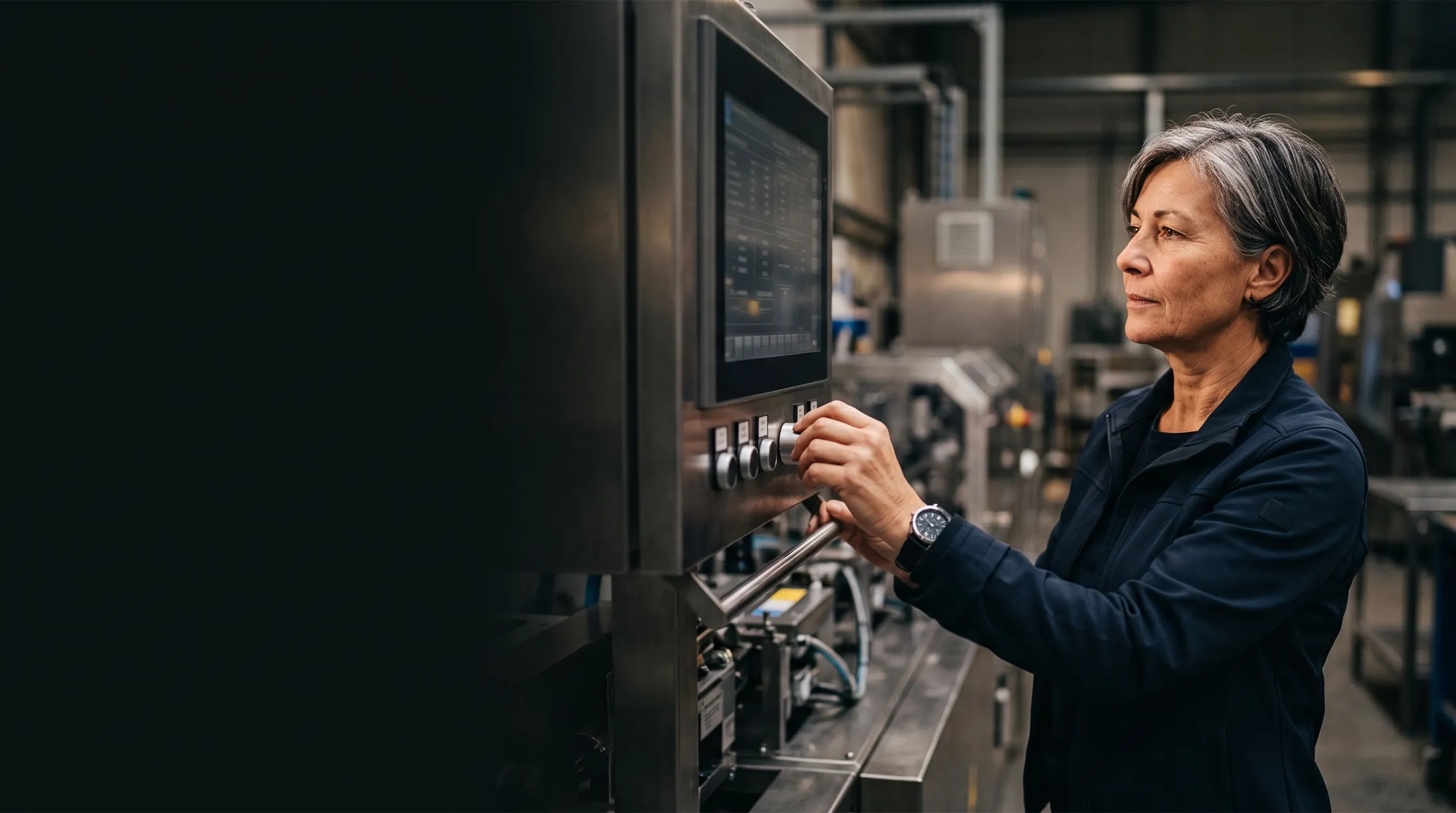
Your experts, available even when they aren't
Pollux creates digital clones of your key experts. Their know-how stays available to your teams, even when the expert is swamped, away or gone.
Book a call


Pollux clones plug into your existing communication tools as seamlessly as any other teammate.
One departure, and a whole body of knowledge walks out the door
An expert takes leave, and a client is waiting on an answer no one else can give. A project stalls because a single person knows the file. A retirement is coming and nothing has been handed over. Each time, your expertise is left exposed.
The most valuable knowledge is never written down
Procedures and documents never tell the whole story. The know-how that truly makes the difference, the judgment calls, the shortcuts, the reflexes that save the day, lives in your experts' heads, and rarely leaves.
Better documentation is not enough. You have to draw out that tacit knowledge where it lives, then make it available on demand. That is what Pollux does.
up to 90% of an organization's knowledge is never written down (Stenmark, 2001)
A clone that answers with your expert's reasoning
Pollux creates a digital clone of your expert, carrying their knowledge, experience and way of reasoning. Your teams ask it questions in plain language, right where they already work (Teams, Slack, and other tools as needed), and get a clear answer in seconds.
An AI assistant answers from your documents. Pollux answers from your experts.


A guided cloning process, from the first interview to a working clone
Pinpoint the critical know-how worth preserving and set the clone's objectives.
Draw out the expert's knowledge, explicit and tacit, in every format.
Turn the raw material into a reliable, queryable knowledge base.
Roll the clone out into your tools and refine it in real conditions, until it's up to the task.
One clone, many transmission challenges
Already at work in the field
Preserving the knowledge of an expert taking early retirement: capture from technical records and incident reports, clone deployed on a dedicated platform.
Reducing reliance on a single, overstretched expert: capture through AI interviews and on-site recordings, clone available in Teams.
Securing rare expertise ahead of a voluntary departure: multi-format capture (interviews, notes, voice memos), clone integrated into Slack.
Each clone protects critical expertise and makes it independent of any single person.


Your knowledge never leaves Europe
Hosting with Scaleway in Paris, AI from Mistral: your entire data-processing chain stays in Europe, out of reach of the US Cloud Act. Each knowledge base is isolated and encrypted, and your data is never used to train a model.
Sovereignty and security →Straight answers
How is this different from an AI assistant connected to our documents?
An AI assistant answers from your documents. Pollux answers from your experts. The difference lies in tacit knowledge: the judgment calls, the reflexes, the tricks of the trade that are never written down and that no document-based assistant can surface. We go straight to the expert for that knowledge, through a dedicated capture process, then make it queryable via their clone.
How much of the expert's time does it take?
Capture happens through short, guided sessions, paced to fit the expert's schedule, not a continuous immersion. Total time depends on how much knowledge needs covering: we scope it together from the first call.
What if the expert isn't willing?
The expert's buy-in is a condition set from the start, not an afterthought. The capture process values their expertise and isn't there to replace anyone: the expert stays the source, the clone carries their voice.
Who owns the clone and the captured knowledge?
Your company. Each clone has its own isolated knowledge base, with no sharing between clients or between clones. You remain the data controller under GDPR, and a clone's knowledge base can be exported on request.
What happens to the clone after the expert leaves?
It keeps answering. The clone is built and tested while the expert is still present, so their departure doesn't interrupt anything. It's then enriched by your teams, always with human validation before any new knowledge is added.
Can the clone make up an answer?
No, by design. Three safeguards frame every answer: upfront on whether the question is in scope, during drafting on what was actually captured, and afterwards a second AI screens out any unverified claim. When the clone doesn't know, it says so, just like the expert would.
Where is the data hosted?
In Europe, end to end. Hosting with Scaleway in Paris, Mistral for the AI, emails and backups also kept within the EU: no non-EU provider is involved in processing. Details are on our Sovereignty and security page.
How does the team query the clone day to day?
In the tools your teams already use: Teams, Slack, and other tools as needed. Anyone asks in plain language and gets a clear, traceable answer in seconds, as naturally as asking a colleague.
How long before a clone is up and running?
The process runs through four phases (scoping, capturing, structuring, integrating). Expect anywhere from a few weeks to a few months depending on the breadth of knowledge to cover and the expert's availability: we set a realistic timeline together from the first conversation.
How much does it cost?
Pricing is set per clone, based on its scope: knowledge domains covered, channels to connect. Most companies start with a single clone. We don't publish a generic price because no two clones are alike. The best way to get an accurate figure is a 30-minute conversation with us.

Which expert can't you afford to lose?
30 minutes to see whether a clone makes sense for you.
Book a call